Promotion of Rule of Law and Judiciary in Africa II – ProLa II
In many African countries, judiciaries face persistent structural challenges: courts are overwhelmed, legal information remains inaccessible, and the most vulnerable members of society, particularly women and small economic actors, are effectively excluded from justice. In Côte d'Ivoire, Ghana, and Senegal, weak institutional capacities and fragmented legal frameworks have compounded these inequities, leaving citizens with limited recourse through either state courts or alternative dispute resolution mechanisms.
ProLa II is the second phase of GIZ's regional programme on the Promotion of Rule of Law and the Judiciary in Africa, and addresses these systemic barriers through applied legal research, evidence-based policy recommendations, and multi-stakeholder dialogue. The programme operates across Côte d'Ivoire, Ghana, Senegal, and Tanzania, targeting both state and non-state actors to strengthen access to justice, judicial autonomy, and the digital availability of legal information.
Dorsch Impact, in partnership with HS Kehl, is responsible for delivering legal studies and stakeholder workshop as substantial contributions to the intended project outputs:
- Strengthening access to justice for vulnerable citizens, especially women;
- Strengthening access to justice for economic actors;
- Aligning judicial structures with the autonomy of the judiciary;
- Ensuring easy access to legal information for legal practitioners.
Disciplines
- Governance, Peace and Social Cohesion
Client
Gesellschaft für Internationale Zusammenarbeit (GIZ) GmbH
Duration
From 2023 to 2025
Location
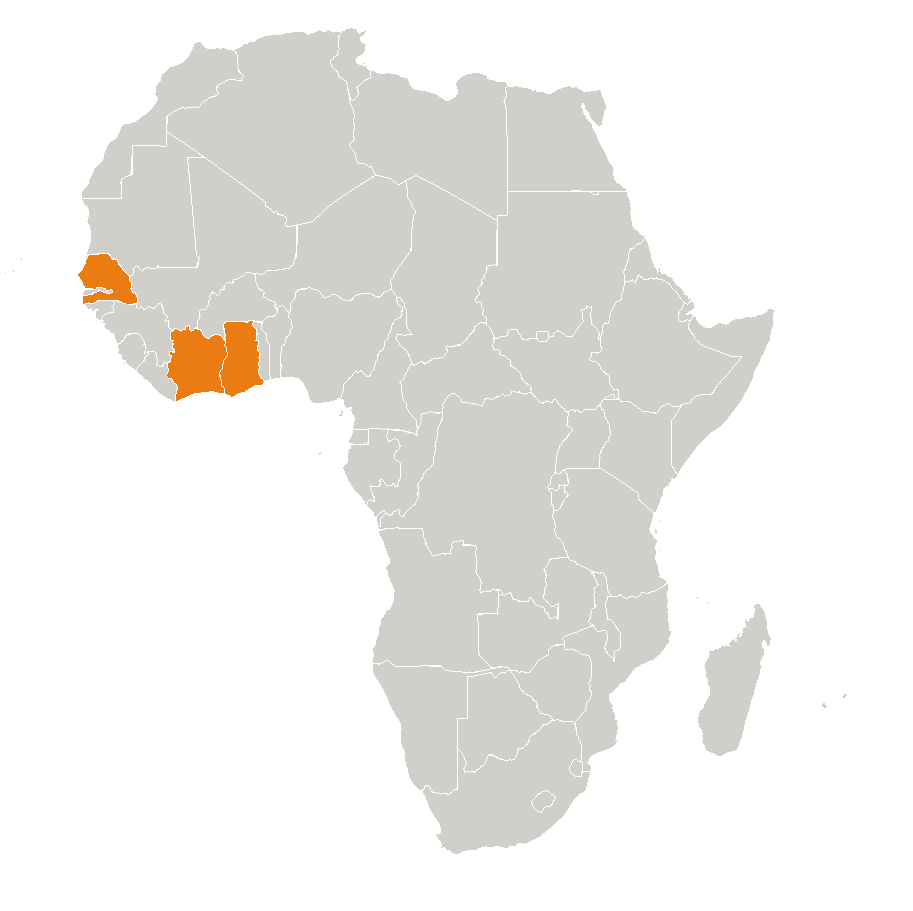
Côte d'Ivoire, Ghana, Senegal
Project Activities
Research & Legal Analysis
- Legal framework study (Senegal): Examining conditions and requirements for the online publication of judgements, laws, and administrative texts, with recommendations for an accessible digital platform
- Comparative anonymisation study (Senegal, Côte d'Ivoire): Analysing data protection requirements under national, regional, and international law across sensitive thematic areas (juvenile delinquency, gender-based violence, high-profile cases); producing a harmonisation recommendation paper for Francophone West Africa
- Digital access impact assessment (Côte d'Ivoire, Ghana, Senegal, Kenya): Quantifying financial savings, evaluating digitalisation funding models, and conducting stakeholder surveys (judges, prosecutors, lawyers, paralegal organisations); published open-access on a recognised academic platform
- Country studies on barriers to justice (Côte d'Ivoire, Ghana, Senegal): Three empirical studies based on a minimum of 300 interviews per country (urban and rural), examining structural obstacles for vulnerable persons and the role of paralegals; published open-access
Stakeholder Engagement & Dissemination
Five national workshops across Senegal, Côte d'Ivoire, and Ghana, each engaging at least 25 governmental and non-governmental stakeholders to present findings and facilitate evidence-based dialogue amongst judicial actors, civil society, and policymakers
Impact
- Strengthened access to justice for vulnerable groups: Research findings and policy recommendations directly inform improvements in legal service delivery for women, marginalised communities, and small economic actors across Senegal, Côte d’Ivoire and Ghana.
- Enhanced digital legal infrastructure: Legal framework studies and impact assessments provide the evidence base for governments and judiciaries to design accessible, compliant online platforms for legal texts and court decisions, reducing barriers for legal practitioners and citizens alike.
- Improved data protection standards: The comparative anonymisation study supports legislative harmonisation across Francophone West Africa, contributing to stronger personal data safeguards in judicial publishing.
- Evidence-informed policymaking: With over 900 interviews conducted across three countries and multi-country stakeholder workshops, the programme generates robust empirical evidence that feeds directly into national and regional justice reform processes.
- Capacity development and knowledge transfer: Workshops and open-access publications ensure that research outputs reach and empower a wide range of justice sector actors, from judges and prosecutors to paralegal organisations and civil society groups.
Contributing to the UN Sustainable Development Goals
We are committed to making a positive impact and supporting the UN Sustainable Development Goals (SDGs). This project contributes to the following SDGs: