Climate-resilient Agri-Food Systems (CREATE)
Zambia's agricultural sector employs the majority of the rural population and underpins national food security. However, the country has been facing persistent structural challenges in translating policy commitments into locally relevant, climate-adaptive practice. Agricultural administrations at sub-national level have had limited capacity for evidence-based planning, while smallholder farmers have lacked access to location-specific, climate-resilient solutions suited to their agro-ecological contexts. The result has been a gap between national agricultural ambitions and on-the-ground implementation.
The Climate-resilient Agri-Food Systems (CREATE): Development of District Agriculture Plans (DAPs) and its implementation project addresses this gap through a targeted technical assistance intervention commissioned by the Deutsche Gesellschaft für Internationale Zusammenarbeit (GIZ) and financed by Germany's Federal Ministry for Economic Cooperation and Development (BMZ).
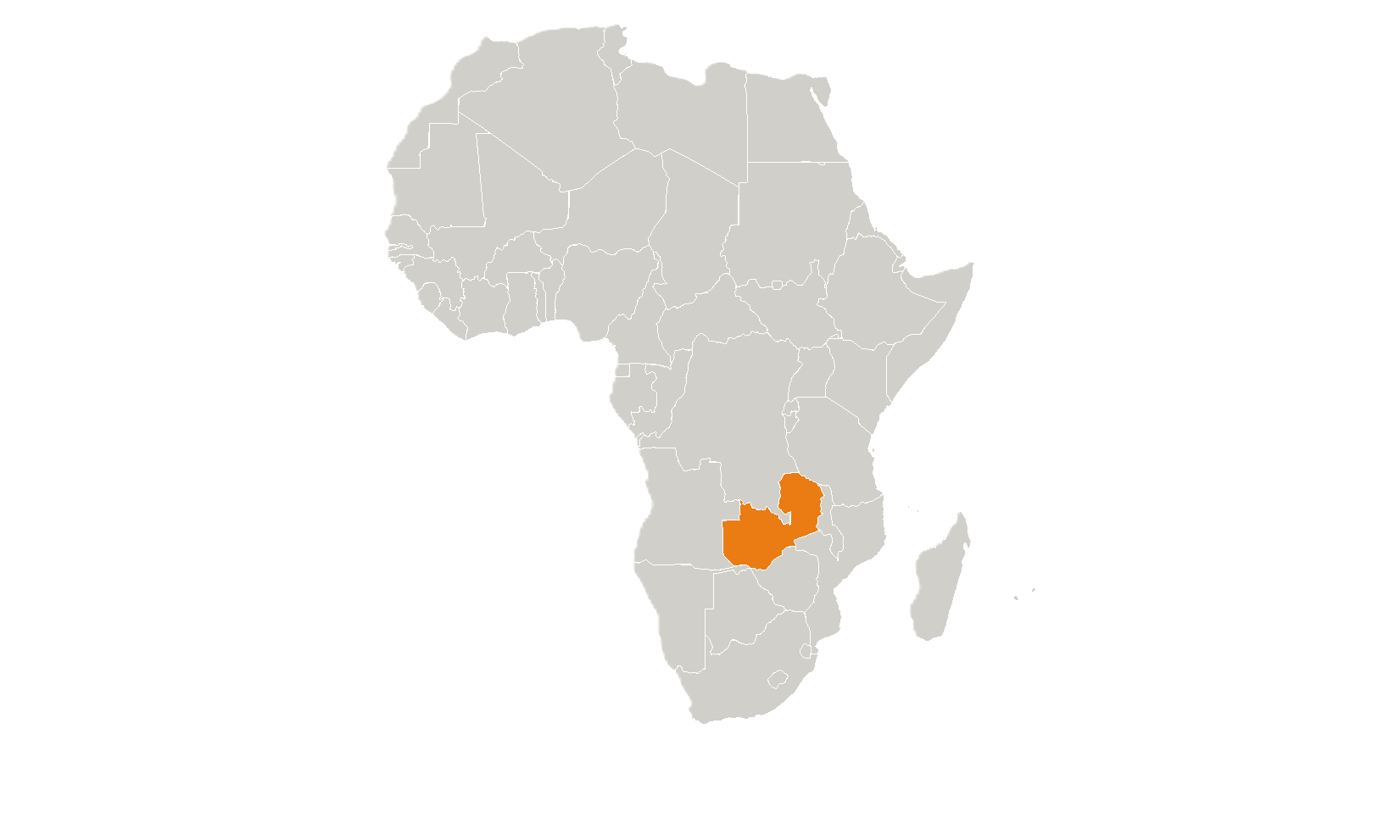
Working across the Southern, Luapula, and Eastern Provinces Dorsch Impact supports the development and implementation of participatory, evidence-based District Agriculture Plans (DAPs) for two target districts per province. These plans integrate climate resilience, nutrition-sensitivity, and inclusive agribusiness development, with a deliberate focus on gender-transformative action and the empowerment of smallholder farming communities.
Disciplines
- Agriculture and Irrigation
- Sustainable Natural Resources Management
- Skills and Economic Development
- Climate Action
Client
Deutsche Gesellschaft für Internationale Zusammenarbeit (GIZ) GmbH
Duration
From 2026 to 2027
Location
Zambia
Project Activities
Institutional Component
- Supporting sub-national agricultural administrations in developing participatory and evidence-based District Agriculture Plans (DAPs) across six target districts in Southern, Luapula, and Eastern Provinces
- Strengthening human and institutional capacities within agricultural administrations for evidence-based policy-making and programme design
- Embedding gender-responsive approaches into policy-making formats, including the presentation of local best practices on gender roles in agriculture at the political level
- Coordinating multi-stakeholder processes involving local organisations, lead farmers, cooperatives, and private sector actors (MSMEs and lead firms) in DAP development and implementation
Technical Component
- Designing and facilitating Training of Trainers (ToT) modules that disseminate location-specific, climate-resilient, and nutrition-sensitive agricultural solutions
- Incorporating Gender Transformative Action (GTA) principles in the modules
- Targeting multipliers: public and private sector advisors, cooperative representatives, and lead farmers
- Developing action plans within DAPs, including financing and monitoring frameworks
- Supporting the demonstration and dissemination of new or improved locally adapted practices, technologies, and knowledge systems for climate-resilient smallholder agriculture
- Facilitating the implementation of validated solutions at target group level, with a focus on long-term investment behaviour among smallholder farmers
Impact
- Strengthened institutional capacity: Agricultural administrations in six districts across three provinces are better equipped to design and implement inclusive, evidence-based programmes aligned with climate resilience and food security objectives.
- Improved policy quality: Participatory DAPs provide a scalable model for evidence-led agricultural planning at sub-national level, with the potential to inform national policy frameworks under Zambia's agricultural development agenda.
- Enhanced climate adaptation: Smallholder farmers gain access to locally tested, climate-resilient solutions, increasing the likelihood of sustained investment in adaptive agricultural practices.
- Gender equity advancement: The integration of Gender Transformative Action across training and policy processes supports more equitable participation and decision-making in the agricultural sector.
- Multiplier effect: The Training of Trainers approach ensures that knowledge and solutions are disseminated beyond direct project reach, embedding capacity within public institutions, cooperatives, and private agribusiness networks for long-term impact.
Contributing to the UN Sustainable Development Goals
We are committed to making a positive impact and supporting the UN Sustainable Development Goals (SDGs). This project contributes to the following SDGs: