Nature as Common Ground: An Interview with Bernd Unger on Environmental Peacebuilding

| Insights

In fragile contexts, natural resource management and conflict prevention are two sides of the same coin. Dorsch Impact senior expert Bernd Unger on what this means in practice for forestry, conservation and environmental financing.

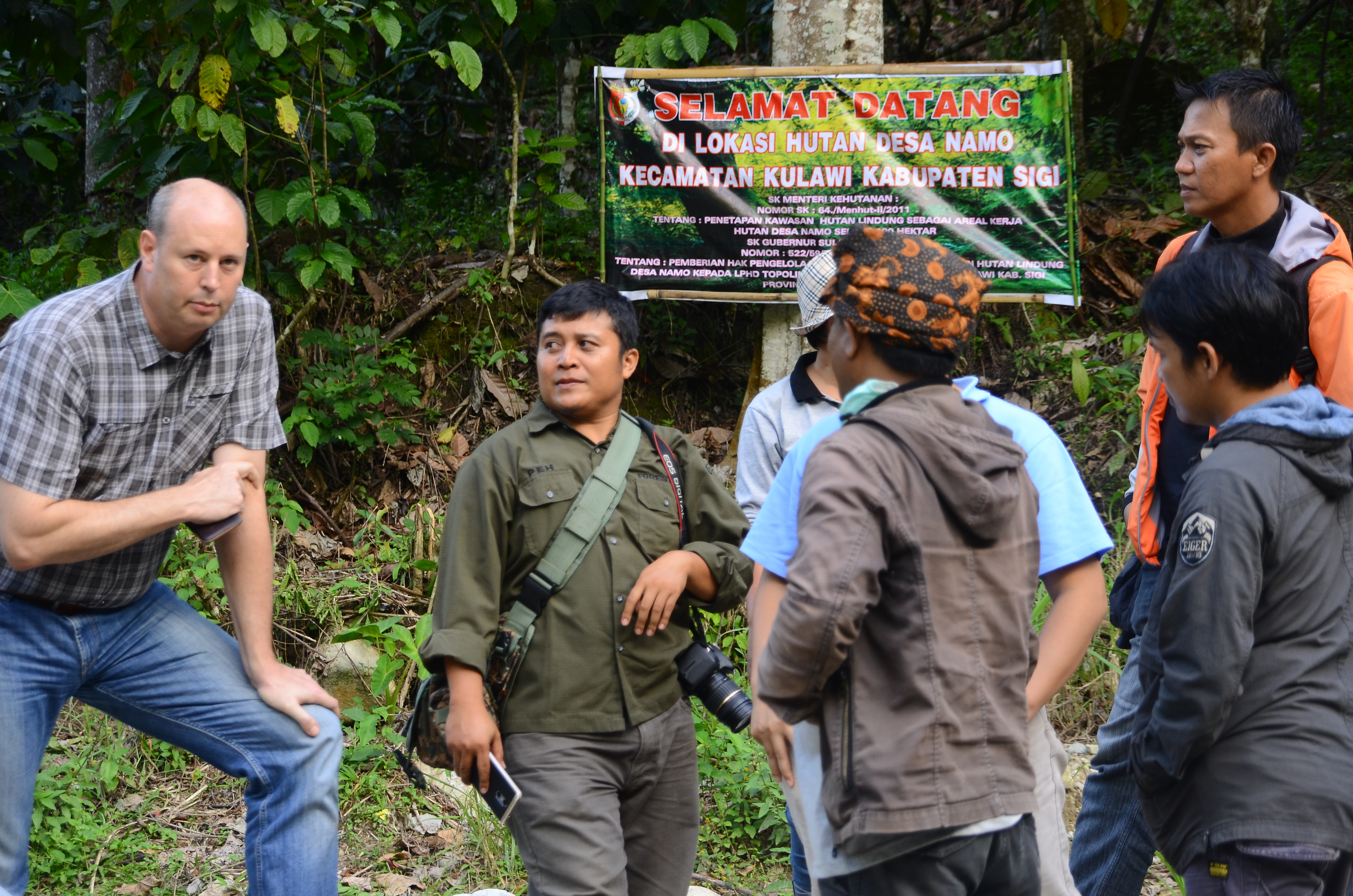
Bernd Unger in dialogue with representatives of the village community, village coordinators and representatives of national authorities (BPSKL, BPDASHL) about the village forest (“Hutan Desa”) in Namo, Central Sulawesi, Indonesia. © Dorsch Impact, 2017

Natural resources sit at the heart of some of the world's most persistent conflicts – and some of its most promising paths to peace. Forests are disputed. Land access is denied. Water sources become bargaining chips. In fragile contexts, the question of who manages natural resources, and how, is rarely just a technical question. It is, above all, a political and human one.

This is the terrain in which our senior expert Bernd Unger has spent much of his career, working across forestry, conservation and environmental financing projects, where the challenges on the ground were as much about community trust, meaningful participation and access to land and resources as they were about biodiversity targets or financing mechanisms. 

In this interview, Bernd Unger shares what three decades of field experience, cross-cultural mediation training and international research collaboration have taught him about the relationship between environment, conflict and peace – and where he sees the greatest opportunities for policymakers, donors and practitioners to deepen their impact.
Bernd, you have been involved with the Environmental Peacebuilding Association since 2019 and since 2020 chair its Forest Interest Group. What first drew you to the link between environment, conflict and peacebuilding?

A few years ago, I started asking myself what the actual reasons were for some of our projects going well and others not so well. Sometimes the reasons are technical, but more often than not they are interpersonal. People don't feel involved; the reasoning behind participants' viewpoints isn't explained; there are differing interpretations of terms, roles and responsibilities, and so on. Ultimately, it comes down to a lack of effective communication. Conflicts arise that are addressed far too rarely and almost never dealt with professionally. This led me to undertake intercultural mediation training between 2014 and 2016. 

The move towards environmental issues – and with it, environmental peacebuilding – was, on the one hand, a logical step, as our projects repeatedly touch on conflicts over natural resources. On the other hand, it came about rather by chance. In 2018, while carrying out a feasibility study for KfW, I conducted a Peace and Conflict Assessment (PCA). About two hours after submitting the report, I received a 'Call for Abstracts' from the Environmental Peacebuilding Association – an organisation I had never heard of before. I used the data from the PCA, submitted an abstract, was accepted and was invited to present at the 1st International Conference on Environmental Peacebuilding at the University of California, Irvine. I went – entirely at my own expense, as it happens.

From your perspective, why do forestry, agriculture and natural resources play such an important role in preventing conflict and supporting peace in fragile contexts?

Forests, agriculture and natural resources more broadly play a dual role. They are frequently the cause of conflicts, but time and again they are also part of the solution. The root causes of conflict can be identified at both a local and a global scale. Farmers dispute access to forest resources with the authorities; countries wage armed conflicts over claims to mineral wealth. Equally, there are many examples of communities finding common ground and arriving at a genuine win-win situation by managing natural resources for the benefit of all. 


When people work together […] a synergy emerges that offers a realistic prospect of long-term sustainability.

The important role you refer to in your question relates, of course, to this second scenario – and here, too, communication is central. When people work together – for instance, where some make a payment (as in payments for environmental services) so that others can protect a forest containing a water source on which everyone depends – a synergy emerges that offers a realistic prospect of long-term sustainability.

You recently co-authored EnPAx glossary chapters on forestry, agriculture and natural resources. What are some of the most important ideas or misunderstandings these chapters help to clarify?

The book Essential Concepts of Environmental Peacebuilding: An A–Z Guide, published in June 2026, was compiled under the leadership of the Environmental Peacebuilding Association (EnPAx). As co-chair of the EnPAx Forests Interest Group (FIG), it was only natural to work on this glossary together with fellow members of the group. We wrote the chapters on Forests, Agriculture and Natural Resources.


It is important to understand that establishing a universally applicable definition of the term "forest" is surprisingly difficult.

To answer your question, I'll use forests as an example. First, it is important to understand that establishing a universally applicable definition of the term "forest" is surprisingly difficult. Some define forests in terms of vegetation or land use, whilst others approach them from a cultural, spiritual or recreational standpoint. The perspective of indigenous peoples, in particular, must be recognised. This illustrates that forests are far more than a source of timber or non-timber forest products (NTFPs). A further point is that forests are both ecosystems and, simultaneously, a reflection of how humans manage those ecosystems. All of this feeds directly into the role of forests in conflict. As noted above, forests can be both a cause of conflict – most often over land use – and part of the solution.

Through your work and exchanges with international experts, what practical approaches have you seen that can help communities manage natural resources in ways that strengthen resilience and reduce tensions?

The best forest managers are those who have been doing it for generations: indigenous peoples. These communities have always lived in harmony with the forest. In our projects, it is therefore essential to give these people a genuine voice and to involve them closely and on an equal footing from the very outset. Participation doesn't simply mean holding the occasional village meeting. It means asking people about their needs and interests and letting them actively shape the project. In some cases, it also means simply leaving a community in peace and taking the project elsewhere.

Conflicts […] are not a problem in themselves, in many cases, they actually present an opportunity for improvement.
Looking ahead, what do you think needs more attention from policymakers, donors and practitioners if environmental peacebuilding is to have greater impact?

Conflicts are part of everyday life. They are not a problem in themselves, in many cases, they actually present an opportunity for improvement. However, this requires that conflicts – or more precisely, conflict resolution – are handled professionally. That demands not only specialist knowledge but also financial resources, which in the context of environmental conflicts often poses a significant challenge. 

Take this example: if neighbours in Germany are arguing over a branch overhanging a fence and bring in a mediator, they split the costs equally. But if a national park authority denies indigenous peoples access to their burial sites because they fall within the park's core zone, the question of who should bear the costs of conflict resolution – which need not always involve formal mediation – becomes far more complex. The indigenous community will be neither willing nor able to do so. The national park authority may have the financial means, but how is it supposed to appoint an impartial mediator? Possible, perhaps, but unlikely. Funding would therefore need to come from an independent body. To make that happen, a dedicated fund for conflict resolution would be needed – not unlike a fund for natural disaster response.

About Bernd Unger

Bernd Unger is a senior expert in Rural Development, Protected Area Management and Conflict Resolution at Dorsch Impact. He has been with the company (formerly AHT GROUP), for more than 20 years. Over three decades of field work, he has built deep expertise across natural resources management and rural development, governance and civil society, and peace and conflict assessment. His regional experience spans Indonesia, Egypt, the Philippines and Vietnam.

Bernd Unger has been a member of the Environmental Peacebuilding Association (EnPAx) since 2019. He was invited to speak at the 1st International Conference on Environmental Peacebuilding at the University of California, Irvine, where he presented on social forestry in Indonesia, and has since participated in the 2nd Conference (online, June 2022) and the 3rd Conference in The Hague (June 2024).

Since June 2020, Bernd has served as Chair of EnPAx's Forests Interest Group (FIG), through which he has organised a series of webinars in collaboration with the Food and Agriculture Organisation (FAO), the World Bank, and a range of international and national NGOs and universities. Most recently, he co-authored chapters on forests, agriculture and natural resources for Essential Concepts of Environmental Peacebuilding: An A–Z Guide, a landmark reference publication compiled under EnPAx's leadership and released in June 2026.

About the Environmental Peacebuilding Association

The Environmental Peacebuilding Association (EnPAx) is a leading global organisation dedicated to connecting researchers, practitioners and decision-makers working at the intersection of environment, conflict and peace. Founded in 2018 as a multidisciplinary community of practice, EnPAx integrates natural resource management into conflict prevention, mitigation, resolution and post-conflict reconstruction, with the aim of strengthening resilience in conflict-affected communities. The association is supported by leading institutions including the Environmental Law Institute (ELI) in Washington D.C. and the United Nations Environment Programme (UNEP) in Nairobi, and serves as a global knowledge platform for the exchange of research, field experience and joint action. Its overarching goal is to advance environmental sustainability as a catalyst for lasting peace and to deepen understanding of how conflict affects natural resources and, with them, people's lives and livelihoods.

Share

Topics

Governance, Peace and Social Cohesion
Sustainable Natural Resources Management

Related Projects