Forest Programme II: Biodiversity Conservation and Development of Integrated Watershed Management
Indonesia's tropical forests are among the most biodiverse ecosystems on earth, yet decades of deforestation, land-use change, and unsustainable agricultural practices have placed them under severe pressure. As a signatory to international climate commitments and an active participant in the global REDD+ framework, Indonesia has prioritised the protection and sustainable management of its forest landscapes, yet translating national policy into on-the-ground action at ecosystem level has remained a persistent challenge.
To support Indonesia's national REDD+ strategy, Dorsch Impact alongside PT Hatfield Indo and ECO Consulting implemented the Forest Programme II across two critical landscapes: the Kerinci-Seblat National Park (KSNP) and its surrounding communities in West Jambi (Sumatra), and the upper and middle Batanghari watershed managed by BP-DAS, directly addressing biodiversity loss, watershed degradation, and the need for community-based conservation models.
Areas of Expertise
- Water Resources Management
- Sustainable Natural Resources Management
Client
Ministry of Environment and Forestry, funded by KfW Development Bank
Duration
From 2016 to 2024
Location
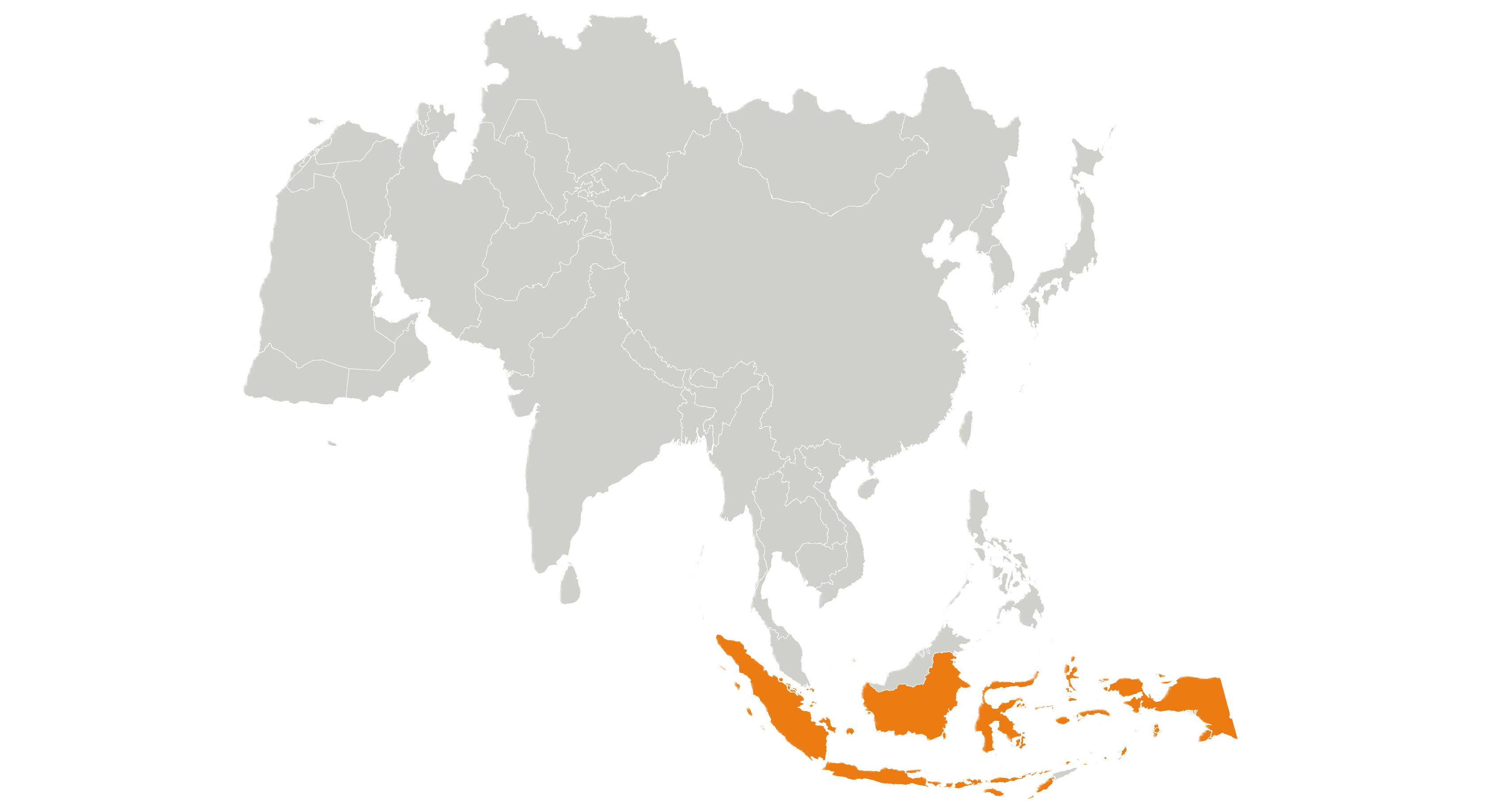
Indonesia
Project Activities
Institutional Component
- Supporting the development of a park management strategy for KSNP, including revised park zoning to strengthen biodiversity and habitat governance
- Establishing multi-stakeholder forums and partnerships to promote community acceptance of the park, mediate human–wildlife conflicts, and coordinate watershed governance
- Setting up Social Forestry schemes, including recognition and formalisation of customary forest rights
- Developing communication, awareness-raising, and behavioural change strategies covering park protection, watershed stewardship, and sustainable livelihoods
- Designing and operationalising a project monitoring and evaluation (M&E) system, including a reference baseline for biodiversity, forest cover, carbon stocks, water quality, and erosion
- Coordinating with local NGOs, including WARSI, and civil society partners to align efforts and leverage complementary expertise
Technical Component
- Designing integrated watershed development and rehabilitation plans for the upper and middle Merangin sub-basin (MSSD), targeting erosion control, reforestation, and land restoration
- Developing general management plans for ecotourism, agro-forestry, basin rehabilitation, and erosion mitigation
- Selecting criteria and priority areas for reforestation and erosion-control interventions, and overseeing implementation across forest–agriculture boundary zones
- Establishing a Measurement, Reporting and Verification (MRV) system and reference emission level (REL) to track forest carbon performance under REDD+
- Organising technical training courses and workshops, covering participatory planning at provincial, district, and village levels, as well as agro-forestry, GIS, and biodiversity monitoring
- Managing programme finances, administration, planning, and reporting across all components
Impact
Ecosystem protection at scale: The programme secured improved management across the Kerinci-Seblat National Park, one of Sumatra's largest protected areas, directly contributing to the conservation of globally significant biodiversity and habitat connectivity.
Climate resilience: By supporting Indonesia's national REDD+ strategy and establishing a credible MRV/REL system, the project created the foundations for measurable, verifiable carbon emission reductions from deforestation and forest degradation.
Community-centred conservation: The establishment of Social Forestry schemes and customary forest recognition empowered local communities as active stewards of forest resources, linking conservation outcomes with sustainable livelihoods.
Watershed restoration: Rehabilitation interventions in the Batanghari watershed improved water quality and quantity, reduced erosion, and enhanced the resilience of downstream communities dependent on these resources.
Capacity strengthened across institutions: Through sustained training, participatory planning processes, and institutional support to BP-DAS and KSNP management, the programme built lasting technical and governance capacity within Indonesian government agencies, ensuring continuity beyond the project lifecycle.
Contributing to the UN Sustainable Development Goals
We are committed to making a positive impact and supporting the UN Sustainable Development Goals (SDGs). This project contributes to the following SDGs: