Water Loss Reduction of the Middle Governorates - Balqa and Madaba
Jordan is one of the world's most water-scarce countries, and the challenge is acute at the governorate level. The Water Loss Reduction Programme for the Middle Governorates (Balqa and Madaba) is a KfW-funded initiative implemented for the Water Authority of Jordan, aimed at improving the efficiency, reliability, and safety of potable water supply systems. The project addresses critical sector challenges, including high levels of Non-Revenue Water (NRW) (50%), deteriorated tertiary networks, insufficient baseline data, and risks of water contamination at the household level.
The programme adopts a performance-based NRW reduction approach, integrating advanced GIS analytics, hydraulic modelling, and field diagnostics to identify and prioritise high-impact intervention zones. The project is structured across five phases, covering preliminary assessment, detailed design, tendering and contracting, construction supervision, and post-construction support during the defects liability period.
Key interventions include the rehabilitation and expansion of water distribution networks, upgrading of pumping and storage infrastructure, and implementation of household-level improvements. In parallel, the project incorporates institutional strengthening and public engagement components to enhance sustainable water management practices and improve water quality awareness among communities.
Overall, the programme contributes to Jordan’s national water security objectives by improving service delivery, reducing system losses, and strengthening the operational and institutional capacity of WAJ.
Disciplines
- Municipal Infrastructure
- Water Resources Management
Client
Water Authority Jordan WAJ, funded by the German Government through KfW Development Bank
Duration
From 2011 to 2026
Location
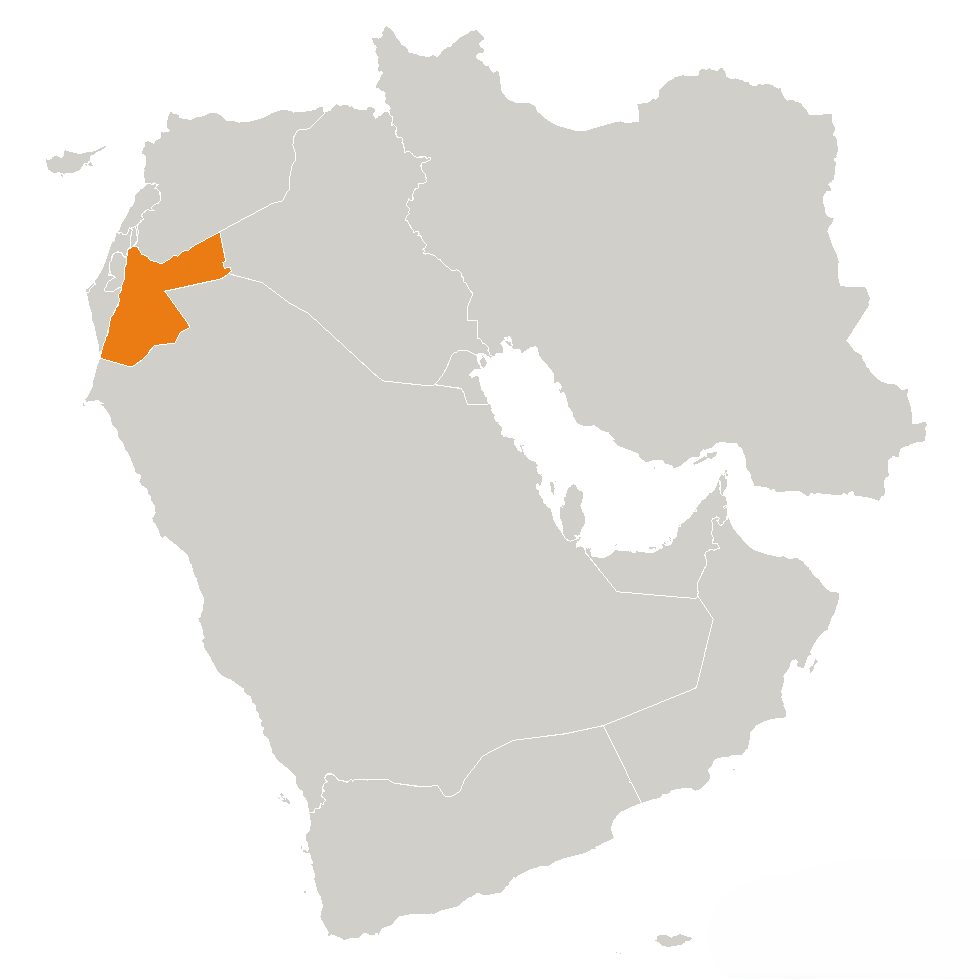
Jordan
Project Activities
Technical Component – Priority Area Identification & Design
- Collecting and analysing baseline data to characterise NRW components, applying a GIS-based diagnostic approach to identify and rank priority intervention zones
- Conducting field reviews, flow and pressure measurements, hydraulic modelling, and topographical and geotechnical surveys
- Designing energy-efficient pump stations, reservoirs, and house connections; analysing 500 private rooftop water tanks for quality testing
Technical Component – Design Documentation & Procurement Support
- Preparing comprehensive design documentation including technical specifications, Bills of Quantities (BoQs), cost estimates, and tender documents
- Structuring contract packages and preparing Instructions to Bidders and Conditions of Contract in line with KfW procurement procedures
- Supporting WAJ throughout tendering and contracting processes, including bid evaluation and contract award
- Supporting re-tendering activities for the As Salt area following termination of the initial construction contract
Technical Component – Construction Supervision & Commissioning
- Supervising all civil works across Balqa and Madaba, including 10.8 km of primary pipeline, 153 km of tertiary pipeline, 6,100 house connections, a reservoir pump station upgrade, and rehabilitation of Safout reservoir
- Providing support during the defects liability period to ensure performance compliance
- Monitoring contractor performance, quality assurance, and compliance with technical specifications and contract conditions
- Supporting commissioning, testing, and handover of completed works
- Providing support during the defects liability period to ensure performance compliance
Institutional Component – Capacity Development & Public Engagement
- Implementing a public awareness campaign on water conservation and hygiene, and engaging communities on household water quality risks
- Supporting WAJ in institutional decision-making, procurement governance, and project oversight throughout all programme phases
Impact
- Measurable NRW reduction: Physical and apparent losses targeted to decrease by 20% in all intervention areas following implementation, directly improving water availability for the population of Balqa and Madaba.
- Improved drinking water quality: Two years post-intervention, water quality in 60% of previously contaminated rooftop tanks is targeted to meet safe thresholds (E. coli <100/100 ml), based on analysis of 500 sampled tanks.
- Significant infrastructure upgrade: Delivery of over 153 km of new and rehabilitated pipelines, 6,100 household connections, and upgraded pumping and storage infrastructure, materially modernising the water supply network in two governorates.
- Resource efficiency and climate resilience: The performance-based and GIS-driven methodology sets a replicable standard for evidence-led water loss reduction across Jordan's governorates, contributing to the country's long-term water security agenda under conditions of increasing climate stress.
- Institutional strengthening: By embedding capacity development within procurement, supervision, and operational processes, the programme enhances WAJ's long-term ability to manage its network sustainably and independently.
Contributing to the UN Sustainable Development Goals
We are committed to making a positive impact and supporting the UN Sustainable Development Goals (SDGs). This project contributes to the following SDGs: