Introduction and Implementation of the SME Loop Project
Tunisia's rural regions, particularly the North-West and Centre-West, face persistent structural challenges: high unemployment, limited access to business development services, and significant economic disparities between urban centres and the countryside. Agriculture and tourism, though central to livelihoods in these areas, remain constrained by low productivity and insufficient entrepreneurial and technical capacity among small and micro-enterprises (SMEs/VSEs).
The SME Loop Tunisia project responds directly to these challenges as part of the broader Regional Economic Development (RED) programme implemented by GIZ on behalf of Germany's Federal Ministry for Economic Cooperation and Development (BMZ). The project introduces and operationalises the SME Loop methodology: a structured, internationally tested approach combining business training with individual coaching, adapted specifically to the Tunisian context and the needs of local economic actors in the agriculture and tourism sectors. The project targets 100 SMEs and VSEs across two rural regions, with a deliberate focus on the economic inclusion of women and young people, in line with Tunisia's national priorities for balanced regional development and sustainable job creation.
Disciplines
- Skills and Economic Development
Client
Deutsche Gesellschaft für Internationale Zusammenarbeit (GIZ) GmbH, on behalf of the BMZ
Duration
From 2025 to 2027
Location
Tunisia
Project Activities
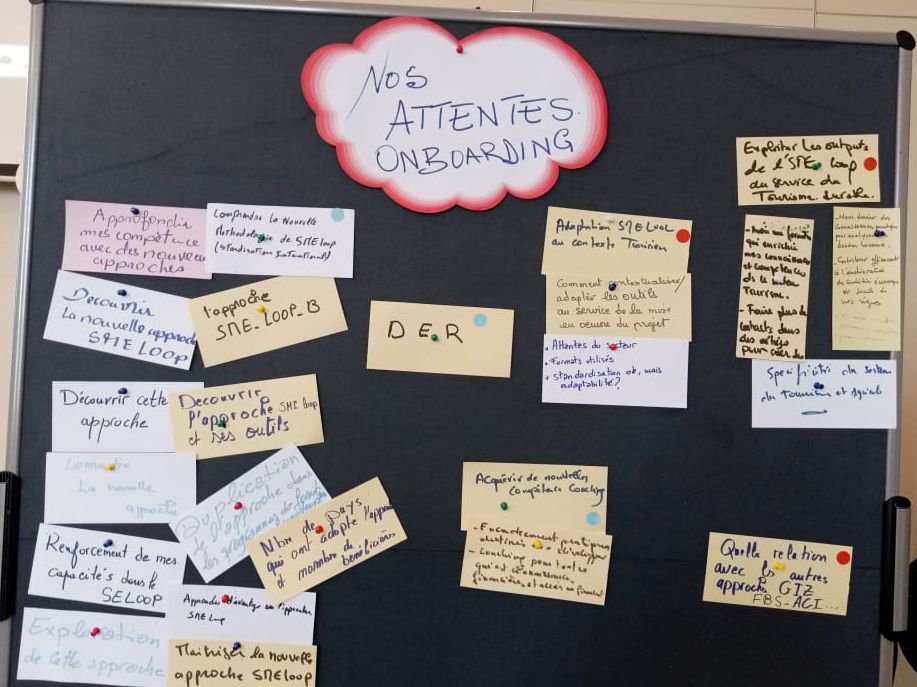
Contextualisation & Methodology Adaptation
- Conducting a mapping of the entrepreneurial ecosystem and stakeholder analysis to tailor the SME Loop approach to Tunisian realities
- Developing localised training modules, materials, and tools aligned with the agriculture and tourism sectors
- Establishing selection criteria and identifying 100 beneficiary companies across the North-West and Centre-West regions
Capacity Development & Training
- Training and certifying 20 Tunisian trainers and coaches drawn from training companies, public entities, and NGOs in andragogy, facilitation techniques, and training evaluation
- Designing and delivering combined training and coaching cycles for 100 rural SMEs and VSEs
- Coordinating with GIZ and mandated training providers to ensure effective rollout and quality assurance
Monitoring, Evaluation & Sustainability
- Establishing an operational monitoring and evaluation (M&E) system based on standard SME Loop tools to track business progress and intervention quality
- Producing interim reports after each project phase and a consolidated final report with results, data, and recommendations
- Anchoring the SME Loop methodology sustainably within Tunisia's national business support ecosystem as a replicable tool for local development
Impact
- 100 rural enterprises in Tunisia's North-West and Centre-West regions benefit from structured business training and coaching, directly improving their competitiveness and economic sustainability.
- 20 Tunisian trainers and coaches are certified and equipped with skills in facilitation and adult learning, building lasting national capacity to deliver the SME Loop beyond the project lifecycle.
- A national monitoring and evaluation framework ensures quality, reproducibility, and evidence-based improvement of entrepreneurship support interventions across Tunisia.
- The project advances inclusive economic growth by prioritising women and young people, contributing to the reduction of regional disparities and supporting Tunisia's broader development agenda.
- By embedding the SME Loop methodology within local institutions, the project strengthens Tunisia's rural entrepreneurial ecosystem for the long term, supporting sustainable job creation in key economic sectors.
Contributing to the UN Sustainable Development Goals
We are committed to making a positive impact and supporting the UN Sustainable Development Goals (SDGs). This project contributes to the following SDGs: