Innovations for Climate-smart Urban Development (INCLUDE)
Bangladesh is one of the world's most climate-vulnerable countries, where rapid, unplanned urbanisation compounds the risks of flooding, waterlogging, and extreme heat, particularly in secondary cities and municipalities. Smaller pourashavas (urban local bodies) frequently lack the institutional capacity, technical resources, and financing to design and implement effective climate adaptation measures, leaving millions of urban residents – especially marginalised communities – exposed to growing climate risks.
The Innovations for Climate-smart Urban Development (INCLUDE): Implementation of Innovation Lab Process and 12 respective Process Lines in Bangladesh project directly addresses this gap by facilitating locally led, inclusive, and innovative climate resilience solutions in four municipalities: Sirajganj, Gaibandha, Chapainawabganj, and Charghat. Operating under the framework of Bangladesh's national priorities for sustainable urban development, the project advances climate-resilient urbanisation through a structured Innovation Lab Process, an iterative, agile, and participatory methodology that moves from problem definition through to the co-creation, prototyping, and implementation of small-scale measures. The project's integrated approach is gender-responsive, participatory, and explicitly focused on embedding innovations into municipal governance structures for long-term sustainability.
Dorsch Impact is responsible for the implementation in a partnership with NIRAS Germany.
Disciplines
- Climate Action
Client
Deutsche Gesellschaft für Internationale Zusammenarbeit (GIZ) GmbH, financed by BMZ
Duration
From 2025 to 2027
Location
Bangladesh
Project Activities
Innovation Lab Process – Organisation & Implementation
- Facilitating and managing 12 Innovation Lab Process Lines across the four target municipalities, covering all phases from preparation and problem analysis through to implementation
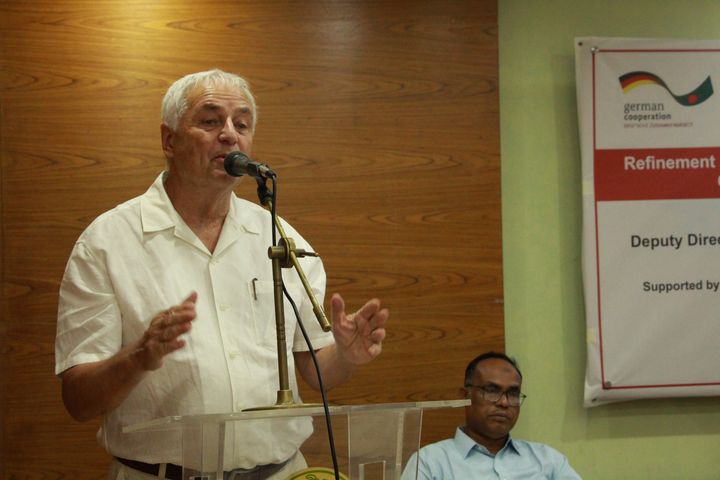
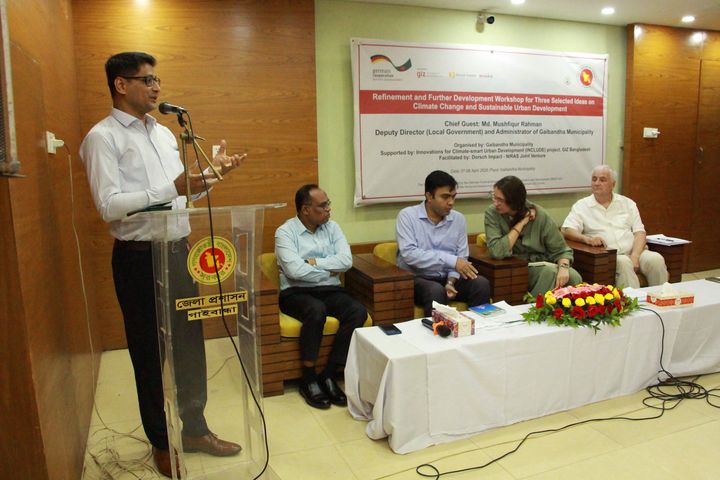
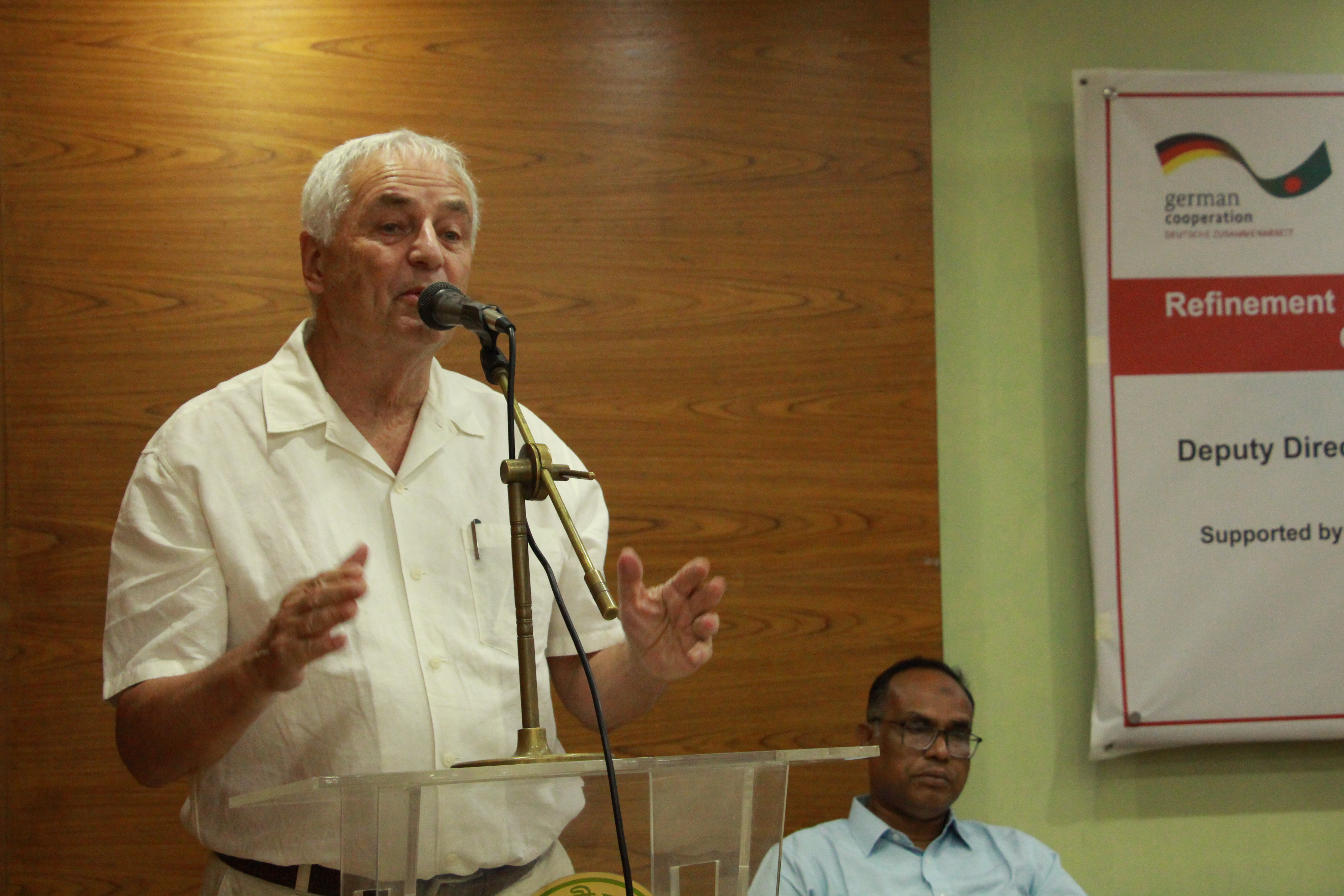
- Organising co-creation workshops, community-driven ideation formats, and user-centric design sprints to develop small-scale climate resilience measures
- Providing iterative technical support for up to 12 small-scale measures, including design, prototyping, user testing, and scaling strategies
Institutional & Partnership Development
- Establishing, maintaining, and institutionalising partnerships between municipal administrations and external actors (private sector, scientific institutions, civil society)
- Designing and implementing steering and coordination structures to ensure coherent project governance across municipal, national, and consortium levels
- Facilitating peer-to-peer learning and experience-sharing among municipalities through structured knowledge exchange formats
Stakeholder Management, Communication & Knowledge Management
- Identifying and engaging key stakeholders at local and national levels, ensuring active and sustained participation throughout the process
- Developing and operating a communication and knowledge management system, including documentation of lessons learnt and good practices
- Preparing policy recommendations for submission to the central government, linking local innovations to national strategic frameworks for climate-resilient urban development
Capacity Development & Institutional Strengthening
- Delivering tailored capacity development to Developer Teams and municipal staff, strengthening technical, methodological, and procedural competencies
- Supporting municipal administrations in embedding and institutionalising innovative, integrated approaches into everyday urban planning and governance practice
- Providing on-the-job coaching to foster continuous learning and sustainable uptake of climate adaptation methods
Assignment Management & Coordination
- Managing and coordinating all project phases, ensuring timely delivery, quality control, and alignment with GIZ and BMZ requirements
- Maintaining transparent workflows, stakeholder reporting, and financial management across the consortium
Impact
- Strengthened climate resilience in four Bangladeshi municipalities through the co-creation and implementation of up to 12 locally tailored, small-scale climate adaptation measures
- Inclusive participation of marginalised groups as both idea contributors and direct beneficiaries, ensuring equity at the core of urban climate action
- Institutionalised innovation capacity within municipal administrations, enabling continued application of climate-smart approaches beyond the project period
- At least three sustained multi-sector partnerships forged between local governments, private entities, and research institutions, supporting long-term implementation capacity
- Contribution to Bangladesh's strategic frameworks for climate-resilient urban development through policy influence at national level, with innovation insights and recommendations submitted to the central government
- Peer learning culture established across municipalities, creating a replicable model for locally led climate innovation applicable to other Bangladeshi cities and comparable contexts
Contributing to the UN Sustainable Development Goals
We are committed to making a positive impact and supporting the UN Sustainable Development Goals (SDGs). This project contributes to the following SDGs:
Project Images