Conditional Performance Support Programme for Local Authorities (PCPC)
Mali faces significant governance and development challenges at the local level. Many municipalities in the country's South, including the former regions of Kayes, Koulikoro, and Sikasso, struggle with limited access to basic infrastructure such as clean water, sanitation, health facilities, education, and rural roads. Weak institutional capacity and insufficient financial management systems further constrain local authorities' (LAs) ability to deliver quality services to their populations.
The Conditional Performance Support Programme for Local Authorities (PCPC): Advisory and technical assistance services to support ANICT in its management of Components 1 and 2 of the PCPC Programme is part of the framework of decentralisation and municipal development in Mali and is classified under the central theme "Peace and Social Cohesion" of the BMZ 2030 reform concept, presented in the document "BMZ 2023".
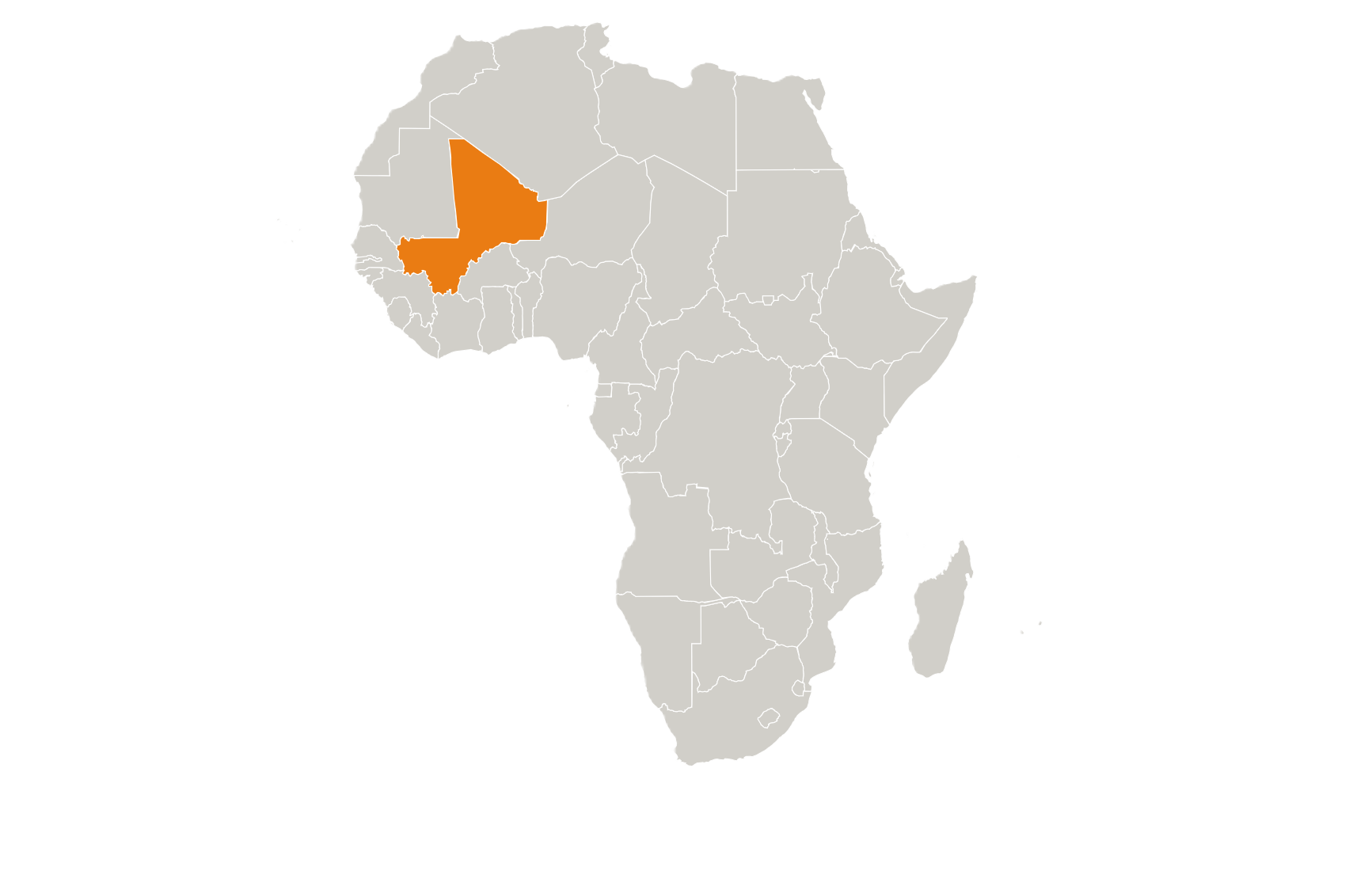
The PCPC represents a synthesis and further development of the approaches of already ongoing programmes: "Local Authority Support Programme (PACT) IV", "PACT: Community Development and Decentralisation Project", "PACT V" and "PACT VI". The PCPC's intervention area comprises new regions in southern Mali: Kayes, Nioro, Kita, Koulikoro, Dioila, Nara, Sikasso, Bougouni, Koutiala (the former regions of Kayes, Koulikoro and Sikasso).
The overall objective of the PCPC is to:
- Support municipal development in selected municipalities by improving the provision of basic infrastructure for the population.
- Support the improvement of the performance of selected municipalities in terms of efficiency, quality and reliability by using financial incentives.
The PCPC is structured into three main components:
- Investment Allocation Financing linked to the National Fund for the Support of Territorial Collectivities (FNACT) by defining Drawing Rights per selected territorial collectivity.
- Financing of Conditional Performance Allocations linked to the FNACT.
- Financing of evaluation missions through the Accounts Section of the Supreme Court (SCCS).
Disciplines
- Governance, Peace and Social Cohesion
- Municipal Infrastructure
Client
National Investment Agency for Local Authorities (ANICT), financed by KfW Development Bank
Duration
From 2025 to 2029
Location
Mali
Project Activities
The GOPA Tech – Dorsch Impact consortium is responsible for supporting ANICT in its management of components 1 and 2.
General and Financial Programme Management
- Financial management of the programme and the disposal fund.
- Compliance with ESSS standards (environmental, social impact and occupational safety) as well as exclusion of child labour, through adaptation of the PACT VI-I/DIN ESMF to the PCPC, development and implementation of grievance and dispute management mechanisms, monitoring of and awareness-raising on the ESMF, ESCP and RPF, ESSS integration during procurement, compliance control, and verification of sub-project ESMPs; monitoring of ESIA recommendations regarding vulnerable groups, gender and conflict prevention will contribute to strengthening social cohesion.
- Implementation of CICT-FNACT recommendations.
- Procurement support through the establishment of a Procurement Plan (PP) in line with the Mali Code and KfW Guidelines, and assistance to contracting authorities in recruiting service providers (MOA approach).
- Project Monitoring & Evaluation, including remote monitoring and geolocation of investments as required by KfW.
- Reporting.
Component 1 Management Support
Targeting the 98 poorest TCs in the former regions of Kayes, Sikasso and Koulikoro under a standard "DIN" approach with predefined Drawing Rights.
- Start-up activities including the Component Implementation Guide and launch workshops with beneficiary TCs.
- Support for sub-project implementation, including close monitoring of a sample of 20 sub-projects.
- Support for project closure, including verification of repair works and completion of ESSS tasks.
Component 2 Management Support
Targeting 30 eligible TCs (district capitals or high-population municipalities), confirmed by CICT-FNACT performance evaluation, under the "innovative DIN" approach.
- Start-up activities including the Component Implementation Guide, launch workshops, TC sub-project proposals with pre-feasibility studies, and analysis and verification of design studies, ESIAs, ESMPs and RAPs, including support for KfW no-objection (ANO).
- Support for sub-project implementation, including recruitment of works and equipment contractors, signing of service contracts, ongoing MOA support for administrative, technical and financial contract management, and regular site monitoring.
- Support for project closure, including verification of repair works and completion of ESSS tasks.
Impact
Improved access to basic infrastructure for populations across 98 of the poorest local authorities in southern Mali, with each authority receiving approximately €50,000 per territorial collectivity in drawing rights to finance priority sub-projects in water, sanitation, education, health, and rural roads.
Strengthened institutional performance of 30 eligible LAs through performance-based conditional allocations of approximately €370,000 per authority, incentivising measurable improvements in financial management, procurement, and service delivery.
Enhanced local governance through capacity development support to ANICT and beneficiary LAs, building sustainable administrative and technical competencies at the municipal level.
Climate and social resilience embedded across all components via systematic application of environmental and social safeguards, gender mainstreaming, and conflict-sensitive programming, consistent with Mali's fragile context.
Contributing to the UN Sustainable Development Goals
We are committed to making a positive impact and supporting the UN Sustainable Development Goals (SDGs). This project contributes to the following SDGs: